How AI Agents Change the Economics of Performance Agencies
Performance agencies tend to encounter the same constraint as they grow. Every new client adds another account to monitor, more campaigns to optimize, and more decisions that someone on the team has to make. Eventually, adding revenue means adding delivery headcount.
AI agents change that relationship by taking on more of the recurring work across each account. Strategy, creative direction, client context, and consequential decisions remain with the agency team. The agency can increase its account capacity without rebuilding the same manual operating layer every time it wins a client.
Where Agency Delivery Capacity Gets Consumed
The recurring work inside an ad account rarely looks large in isolation. It is a pacing check, a search-term review, a creative test that needs a decision, an unexpected performance change, or a budget adjustment. Across a portfolio of clients, those tasks become a standing operational workload.
An agent can monitor account performance, investigate changes, surface opportunities, and prepare or execute supported actions within the controls configured for that account. The media buyer still sets the objectives, supplies client context, and handles decisions that require judgment.
That changes how the team spends its time. Media buyers can focus on unusual account behavior, strategic tradeoffs, and growth opportunities. Account managers have more room for client conversations instead of assembling updates from yesterday’s metrics.
How Junior Buyers Learn When Agents Handle More Execution
Junior buyers have traditionally developed judgment through repetition: pulling reports, reviewing search terms, pacing budgets, changing bids, and watching what happened next. When agents take on more of that work, agencies need to make the learning process more deliberate.
A junior buyer can review why the agent flagged a campaign, which evidence informed the recommendation, what action was proposed or taken, and how performance changed afterward. They can then ask whether important client context was missing, whether the decision fit the account strategy, and whether they would have made the same call.
This changes the apprenticeship model. Junior buyers spend less time completing routine account tasks and more time examining decisions with an experienced operator. The agent provides a visible record of the work; senior buyers still teach the judgment required to evaluate it.
What This Does to Agency Economics
Consider what happens when an agency wins several accounts at once. Each account brings its own pacing checks, search-term reviews, creative tests, budget decisions, investigations, and client reporting. Strategy may still fit within the team’s capacity, but the recurring account work eventually forces another hire.
When an agent handles more of that recurring work, the marginal cost of adding an account changes. The agency still needs people to set objectives, understand the client’s business, make consequential tradeoffs, and judge the quality of the work. It does not need to recreate the same manual monitoring and execution routine for every new account.
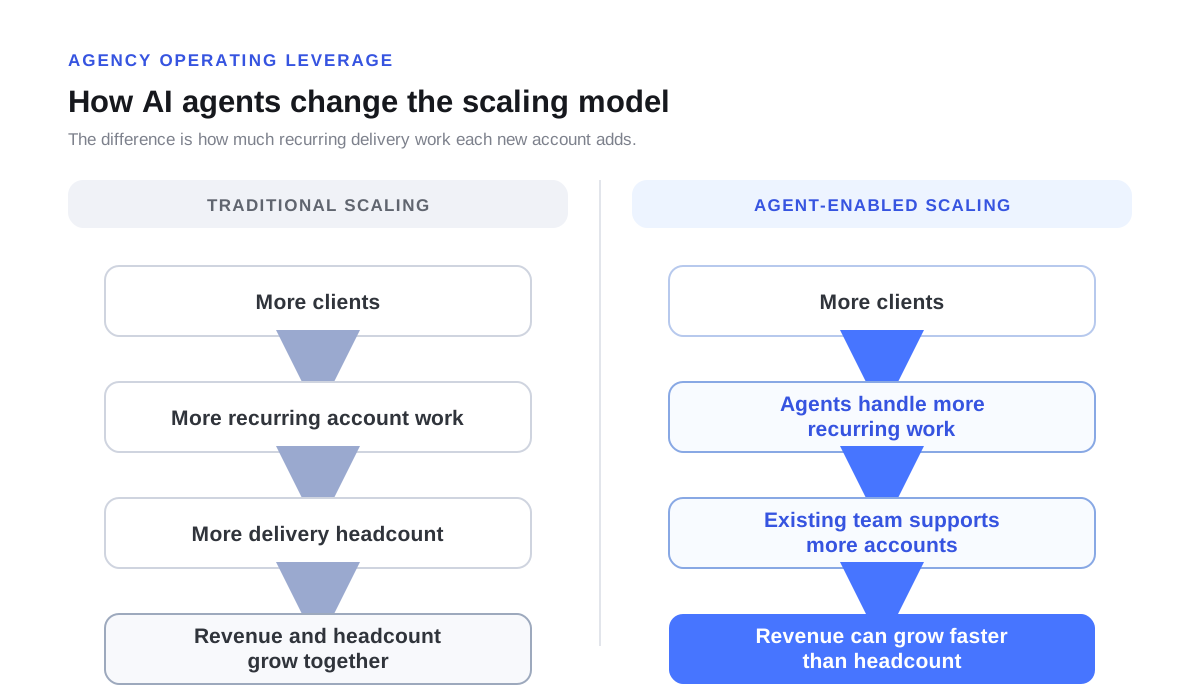
That does not make an additional account costless. Complex clients still require attention, and delivery capacity will vary by service model. The economic opportunity is more specific: revenue per employee can rise because account volume and delivery headcount no longer have to grow at the same rate.
What This Looks Like With MAI
MAI can monitor performance, investigate changes, surface recommendations, and execute supported actions inside configured workflows. The agency defines the objectives, account scope, constraints, and review settings. Proposals and logged changes give the team visibility into what the agent recommends or does.
For agencies, the practical starting point is usually one recurring job: monitoring account health, investigating performance changes, managing a defined optimization workflow, or preparing a reliable client update. Once the team trusts the process and understands the escalation boundaries, it can expand the work handed to the agent.